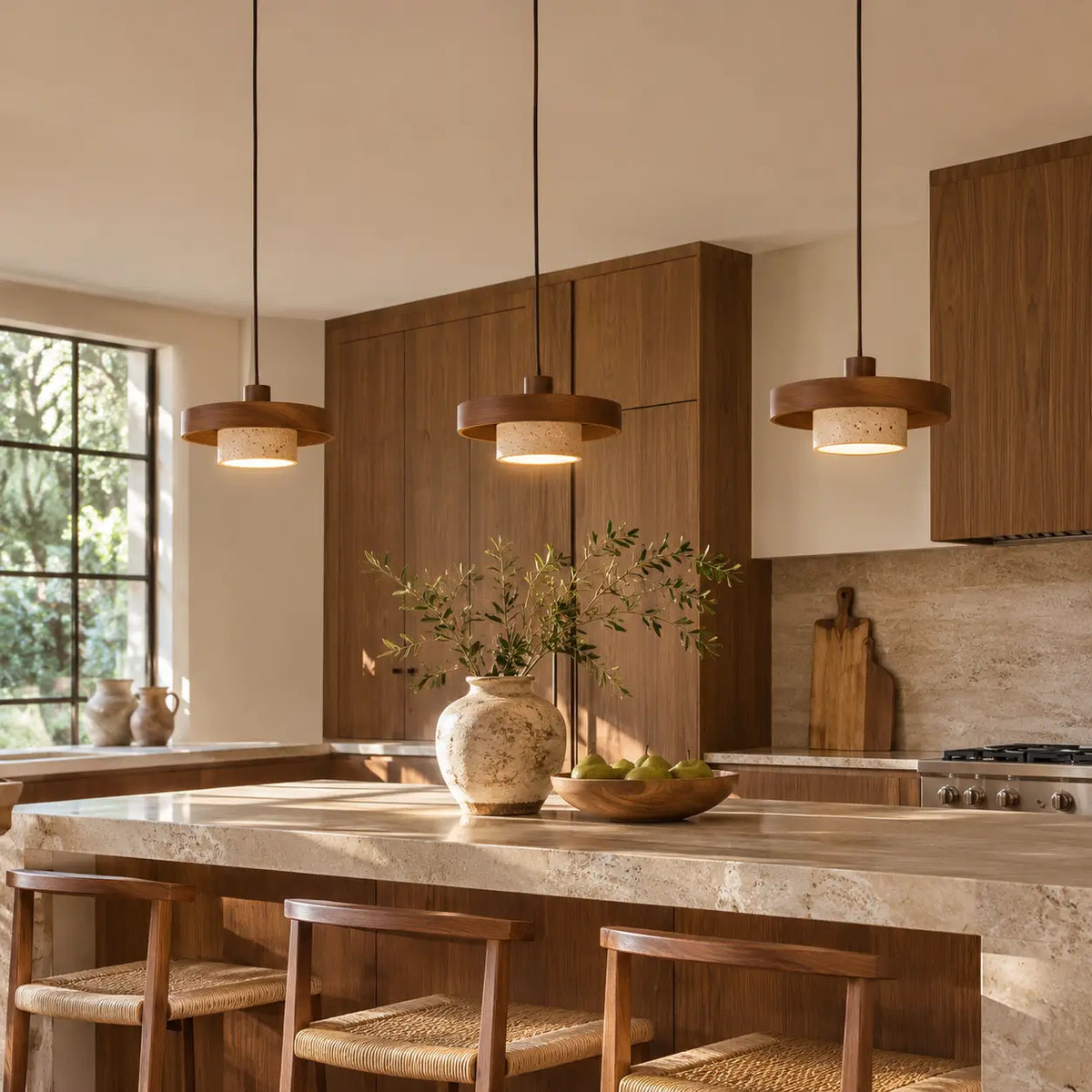
Travertine vs. Alabaster Lighting: Which Suits a Warm Holiday Home?
A holiday home has to work in two moods: daylight on a Thanksgiving table and a quieter glow once dinner is over. Natural stone lighting can suit both, but the material you choose changes what you notice about the fixture.
When comparing travertine vs alabaster lighting, choose travertine for earthy surface texture and an architectural presence; choose translucent alabaster when an illuminated stone shade is the effect you want. Either can feel warm. The light source, shade design, and controls determine whether that warmth translates into a comfortable room.
Start with the moment you want to improve: a daytime gathering, an evening dinner, or a living room that needs to feel inviting after the Christmas tree comes down.
Travertine vs. Alabaster Lighting at a Glance
| Decision | Travertine | Alabaster |
|---|---|---|
| Visual character | Visible pores, mineral patterning, and an earthy stone surface. | Pale stone with cloudy variations that can become more apparent when illuminated. |
| Lighting effect to look for | Light directed through openings or across the wall; inspect the actual fixture design. | Light transmitted through a translucent shade; the effect varies with the stone and its thickness. |
| Suggested holiday setting | Linen, oak, simple greenery, and a relaxed natural palette. | Cream textiles, glass ornaments, warm metals, and an evening focal point. |
| Useful buying check | Does the light reach the surface you need to illuminate? | Does the glowing shade also provide enough useful light for the room? |
| Care consideration | Avoid acidic cleaners on the calcium carbonate stone. | Gypsum alabaster is vulnerable to abrasion and water; follow the fixture's care instructions. |
The room pairings above are styling suggestions. Material alone does not establish brightness, dimming capability, or suitability for a particular location.
What Changes When You Switch the Light On?
Travertine brings texture into the room
Travertine is a porous form of limestone composed primarily of calcite. The Museum of Fine Arts, Boston's CAMEO materials database describes how mineral-rich spring water forms its layered deposits and characteristic cavities.
For a holiday interior, that surface offers a useful starting point: pair a beige stone fixture with an oak console, an ivory runner, and loosely arranged greenery. The stone remains part of the composition while the lights are off.
Check where the light actually exits. An up-and-down wall fixture can frame an entrance or brighten a wall, while a pendant with a downward opening serves a different purpose. Neither effect follows from the word “travertine” alone. For a kitchen island, review travertine pendant weight, scale, and surface pairing before choosing the fixture.
Alabaster can make the shade itself luminous
Alabaster commonly used in decorative lighting is a fine-grained gypsum stone valued for its translucency. The MFA's alabaster reference identifies it as soft and susceptible to water and abrasion. The name also has historical uses for other stones, so confirm the material in the product specification.
In a translucent alabaster fixture, light passes through the stone, making the shade part of the lighting effect. Look for photos taken both lit and unlit: pale stone can reveal noticeably different patterning after dark.
That luminous surface can suit a dining room or conversation area, but it does not guarantee a glare-free view or adequate table lighting. Shade thickness, exposed LEDs, output, and viewing angle still matter. Zarvolighting's alabaster lighting guide offers a broader starting point for comparing fixture forms.
Use the Daylight, Dinner, and January Check
Before choosing a material, picture the fixture in three situations. This simple check keeps a seasonal purchase useful throughout the year.
Daylight: what does the room need before guests arrive?
If the room feels flat beside wood furniture and neutral upholstery, consider travertine for another layer of texture. Keep the surrounding decorations restrained so the stone's surface remains visible.
If the room already has strongly grained wood, patterned rugs, or a stone fireplace, a simple alabaster form may give the eye a quieter place to rest. Compare the actual stone patterns rather than assuming all pale shades look alike.
Dinner: where should attention settle after dark?
Choose alabaster if your priority is a glowing decorative shade above or beside the gathering area. Pair it with practical illumination that lets guests see their plates and the serving surface comfortably.
Choose a travertine wall light if you want to bring attention to the architecture around the gathering. For example, Zarvolighting describes the Veil Travertine Wall Lamp as a yellow-travertine fixture with up-and-down illumination. Its listed warm-white option is 3000K, and dimming is available upon request. Confirm the requested configuration before ordering.
January: does the fixture still belong?
Imagine removing the garland, ornaments, and holiday table setting. Travertine can continue the room's connection to wood and woven fabrics; alabaster can remain an evening focal point beside a sofa or over a dining table.
If the fixture only works with your December decorations, revisit its shape, finish, or scale. Choose the permanent light around the furniture and use seasonal accessories to change the mood.
Make Either Material Feel Warm With the Right Light
Stone color and light color are separate decisions. Beige travertine can look warm in daylight, while the LED inside the fixture may produce a cooler light. A pale alabaster shade also needs an appropriate light source to create the evening effect you expect.
The U.S. Department of Energy lists 2700K as warm and 3000K as soft. Use that range as a starting point when comparing options for a welcoming holiday room, then assess the fixture alongside your existing lights.
Brightness is a separate specification, measured in lumens. A glowing shade may look bright in a photograph without lighting the whole table. Check published output and ask for room photos or lighting information when the fixture will be your main source.
For adjustable evening lighting, verify that the exact bulb or integrated LED driver supports the intended control. A color-temperature selector does not establish dimming compatibility. Before a gathering, try the room from a seated position and check for exposed bright sources, distracting reflections, and dark serving areas.
Care and Buying Details Worth Checking
For routine dusting, follow the manufacturer's instructions and use gentle tools appropriate to the finish. Avoid treating a stone lamp like a kitchen countertop.
Travertine's calcium carbonate composition makes acidic cleaners a poor choice. The Natural Stone Institute's care guidance explains that products containing lemon, vinegar, or other acids can dull or etch calcareous stone. For gypsum alabaster, avoid wet cleaning unless the fixture manufacturer specifically permits it.
Before purchasing, confirm these details for the exact model:
- Natural stone type, finish, and expected variation between pieces.
- Dimensions, fixture weight, and mounting requirements for your space.
- Light output, color temperature, and the specified dimming arrangement.
- Electrical documentation and location suitability for the intended U.S. installation.
- Delivery estimate to your ZIP code, with time for inspection and installation before hosting.
Have your installer review the model's mounting and electrical requirements before the installation appointment. Material choice alone cannot establish those requirements.
Which Stone Should You Choose for Your Holiday Home?
Choose travertine when texture and architectural lighting lead your design; choose alabaster when a luminous stone shade is the feature you want after dark. In an open living and dining area, you can also combine them: use travertine to accent a wall and alabaster as a separate focal point, with a repeated metal finish to connect the spaces.
Start with Zarvolighting's travertine lighting collection for earthy material character or its alabaster lighting collection for translucent stone designs. Compare the lit view, the unlit view, and the specifications before choosing the fixture you will enjoy through the holidays and beyond.